
|
||||||
The Outrageous Life of Benvenuto Cellini | His Autobiography
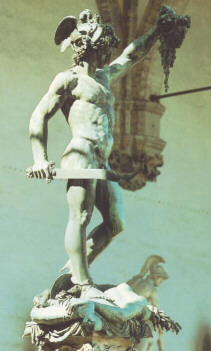
Benvenuto Cellini began the riveting tale of his life by advising other potential authors on how to write their own autobiographies, first by informing their readers that they come from worthy stock and ancient origin. In accounting his life, Benvenuto Cellini claims descent from an Italian man, Fioreno of Cellino, whose life was spent as guard captain in the service of Julius Caesar, some sixteen hundred years past. Benvenuto Cellini claimed that Caesar named the town of Florence after his captain to honor him. Most historians believe that Florence was named to honor the goddess Flora, whose followers had an annual festival. The written life of Benvenuto Cellini, does not mention Flora. Unmindful that his flute playing sent his doting father into sighing, tearful ecstasy, the life of Benvenuto Cellini took a different direction. Forsaking paternal wishes that he become a musican and composer, Benvenuto Cellini instead shunned the hated flute and chose instead the goldsmith's life. Benvenuto Cellini actually knew and worshipped Michelangelo Buonarroti and it is from his autobiography the we learn something of the life of Michelangelo. Cellini recorded a conversation he had with Italian sculptor, Piero Torrigiano, in which Torrigiano admitted to breaking Michelangelo's nose when they both were boys. We see evidence of Torrigiano's deed in portraits of Michelangelo where he appears to have a crooked nose. The exploits of Cellini are too numerous to relate. Throughout the life of Benvenuto Cellini, kings, dukes, and popes sought him out for his works of exquisite craftsmanship, while villains, thieves, and necromancers knew him for far less noble reasons. The colorful exploits of Benvenuto Cellini chronicled in his autobiography give us insight into the flavor of Italian Renaissance life through his unique perspective. If Benvenuto Cellini's account of his life is true as much of it appears to be, it is surprising that the artist had time for art. He died in Florence in 1571 at the age of 71 leaving behind a magnificent legacy of work. Still in the news today, Cellini's grandiose gold and enamel masterpiece, the Saltcellar of Francis I executed in 1540 for the King of France and valued today at $60,000,000, was recovered recently after being stolen from a museum in Vienna. The art world continues to appreciate the life and work of Benvenuto Cellini, even if he does tell us himself of his greatness. No one blows his own horn louder than Benvenuto Cellini. Brenda Harness, Art Historian
| ||||||
|
 QUOTE
QUOTE
|
Welcome ! |
|
We respect your privacy and will never sell your personal information. |
| Click here to sign up for our newsletter. |
Buy great
art books
at Amazon!
Home Glossary of Terms Contact Us About Us Newsletter Subscription