Patronized by the Medici family, the workshop owned by the brothers Antonio and Piero Pollaiuolo was a thriving business in Florence during the Early Italian Renaissance. The Pollaiuolo brothers executed bronze and gold sculpture, paintings, and other decorative art. Intensely interested in the movement of the human body, Antonio Pollaiuolo is thought to have dissected corpses to improve his understanding of human anatomy.
Antonio was the more talented of the two Pollaiuolo brothers.
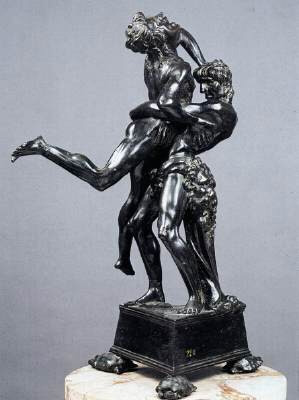
Scholars disagree as to which Pollaiuolo brother did what work, but it is generally assumed that Antonio Pollaiuolo was the more talented of the two brothers. The sculpture of Hercules and Anteus showcases Pollaiuolo’s ability to depict the human form in an emotional and physical way. Both Leonardo and Michelangelo were influenced by this work.
His most significant works are the bronze papal tombs of Sixtus IV (1493) and Innocent VIII (1498).
Brenda Harness, Art Historian